How to Create Matching Team Uniforms With Custom Patches
There’s a funny thing about team uniforms, everyone obsesses over what to add, what to design, what to sew, and what kind of custom patch will make the whole crew look like they stepped out of a neatly synchronized sports commercial. But people rarely talk about the absolute disasters that happen when someone follows the wrong instincts.
Or when the self-appointed “creative lead” of the group makes decisions at 2 AM with a half-eaten sandwich nearby. And honestly, avoiding bad practices can sometimes save you more time, money, and sanity than following the “official” advice floating around Pinterest boards and corporate branding manuals.
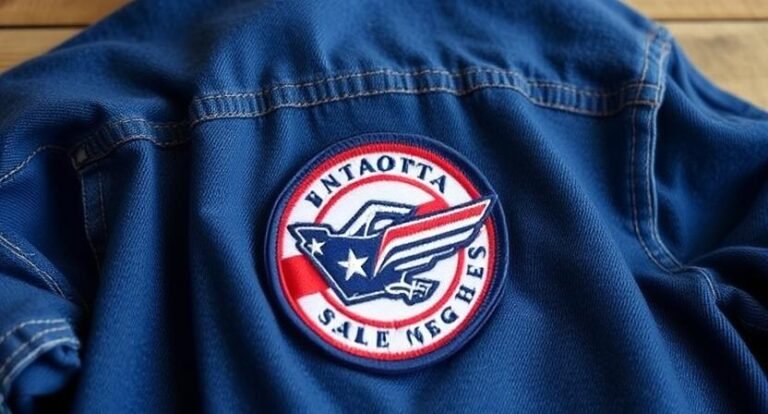
Creating matching team uniforms with custom embroidered patches should feel like teamwork. Think of this as the reverse Google Maps of design: if you follow every mistake here, you’ll end up lost, frustrated, and probably holding a box of patches that look nothing like what you ordered.
And if that visual hurts a little, good. It’s supposed to.
1. Ignore the Team’s Identity Completely (Because Who Even Needs a Concept?)
You’d be surprised, actually, maybe not, how many teams blindly order patches without thinking even once about what they represent. There’s a volleyball team with a motorcycle logo. A debate club with flaming skull patches. A school robotics squad using Comic Sans embroidered in neon yellow. The real tragedy? Someone actually approved these designs while fully awake.
The consequences? Oh, endless. The uniforms look mismatched. The patches feel out of place. People hesitate to wear them in public, unless irony becomes fashionable again. Even the team morale sinks, because strangely enough, people don’t feel connected when the imagery looks like it belongs to a completely different group. And yes, I’ve seen this happen in real life, an entire cricket team refused to pose for their annual photo because their leather patches looked like a parody of themselves.
The smarter alternative (and honestly, just basic common sense) is to spend time understanding the team’s vibe. What message do you want your patch to convey? Something fierce? Something clever? Something professional? A little consistency goes a long way.
2. Choose the Wrong Patch Style—Preferably the Most Impractical One
Let’s talk about patch types for a second. Embroidered, woven, PVC, chenille, printed… the list goes on. And yet, somehow, people still manage to pick the least suitable option for their needs. It’s like choosing suede shoes for a rainy day. Or wearing wool socks to the beach. Technically possible, yes. But advisable? Absolutely not.
One of the most common disasters happens when teams select embroidered patches for extremely intricate logos, tiny text, micro elements, photo-like gradients. The end result? A blurry mess that looks like it went through three laundry cycles before it was even sewn on. I once saw a patch that was supposed to say “Golden Hawks” but looked more like “GoIderi Hcuks,” which is both concerning and kind of fascinating to stare at.
Selecting the wrong patch type leads to quality issues, durability problems, and uniforms that nobody enjoys wearing. The smarter (and honestly, more peaceful) approach is to match the patch style to the artwork and the uniform material. Simple logos = embroidered or woven. Detailed logos = woven or printed. Outdoor teams = PVC. Soft-material uniforms = choose something lightweight.
Basics. Yet somehow, widely ignored.
3. Forget About Color Coordination and Let Chaos Lead the Way
This mistake should be a crime. People wildly underestimate the power of color harmony until they stand in front of a full team wearing uniforms that look like a lost parade float collided with a box of mismatched crayons.
Nothing looks unified. Nothing photographs well. And wearing the uniform feels more like a dare than team pride.
The smarter alternative is pretty obvious, stick to complementary colour palettes, or at the very least, check a digital mock-up before ordering. The horror that can be avoided with a quick color check is genuinely astonishing.
4. Order the Wrong Patch Size (Too Tiny to Read or Too Huge to Ignore)
Patch sizing mistakes are legendary. Tiny patches are useless. Nobody can see them. Nobody can read the words or recognize the logo. The smarter move is to choose proportionate sizes. A chest patch should usually be around 3–4 inches. A sleeve patch maybe 2–3 inches. Back patches should be large, yes, but not paralyzing.
5. Skip Quality Checks Because “It Will Probably Be Fine”
Patches might peel off during a match. Colors fade. Threads unravel. The embroidery density might be so wrong that your shirt puckers like it’s trying to breathe.
The consequences range from mild embarrassment to full-on uniform meltdown during important events. I’ve seen soccer patches fall off mid-game like autumn leaves. I’ve watched entire batches of name patches come out crooked because nobody inspected the first sample.
A smarter choice is to always, always request proof or a sample and inspect it closely.