Patches in Sports Culture
So you walk into a sports memorabilia shop, you know the kind, smells like old cardboard and possibility, and you see the usual lineup. Signed jerseys going for mortgage-payment prices, vintage cards encased in plastic like they’re ancient artifacts (which, fair), championship posters that your dad probably had in his garage. But there’s this thing happening, right now, in the weird corners and margins of sports culture that literally everyone’s sleeping on.
Patches.
I know, I know. You’re thinking “custom patches? really?” and I get it because they seem… inconsequential? Like, they’re just small fabric things that sit on uniforms or jackets. Not exactly the flashy collectible that screams “investment opportunity” or “cultural phenomenon.” But that’s precisely, and I mean precisely, what makes them this insane blind spot. While everyone and their investment-savvy cousin is fighting over the same saturated markets (NFTs crashed, cards got too expensive, sneakers peaked around 2022-ish), patches are just sitting there. Virgin territory.
The potential isn’t some pie-in-the-sky theory I’m spinning. Small patch operations are quietly pulling six figures yearly. Grassroots sports movements are building entire identities, like, actual community cohesion, around custom patches. The early adopters who figured this out maybe five, six years ago? They’re sitting on collections that appreciated 300-400%, which is better than most people’s 401ks did recently (don’t @ me about that).
Let me pull back the curtain on what you’ve been missing.
The Micro-Team Merchandise Gap (Or: Why Youth Sports Parents Are Your Goldmine)
Every single kid who plays youth soccer, little league, rec basketball, whatever, comes home wanting team stuff. Team pride is real, even at age seven. But here’s the dirty secret nobody in the sports merchandise industry talks about: 95% of these teams literally cannot afford traditional merch. Like, the math doesn’t work.
Screen-printed t-shirts require minimum orders (usually 50+ units) at $12-15 each. For a team of 12 kids? You’re asking a volunteer coach who’s already buying orange slices out of pocket to drop $600-750 on shirts. It’s financial suicide. So most teams just… don’t. The kids get nothing, or maybe a cheap ribbon at end-of-season, and that’s it.
Enter patches, which cost $1-3 per unit now with NO minimums thanks to digital embroidery digitizing advances in 2024-2025 (the technology finally caught up to the need, which is wild). A coach orders exactly 12 patches for like $36 total, and suddenly every kid’s got something they can slap on their jacket, their backpack, their bedroom wall. The emotional impact? Identical to that $25 t-shirt. The financial barrier? Gone. Obliterated.
There’s this woman in Ohio, Sarah, not her real name but whatever, who spotted this gap in 2023. She started offering custom name patches to youth sports teams in her county, charging $4 per patch (still wayyyy cheaper than alternatives, right?). Last year she processed orders for 147 teams. That’s roughly $7,000+ in revenue from a side hustle that takes maybe 10 hours weekly, mostly just design consultations and managing orders through some Shopify setup she built in a weekend.
But here’s where it gets weirdly emotional: those kids keep those patches forever. I’ve still got mine from 1998 soccer somewhere in a box (probably in my parents’ attic alongside my Pokemon cards and regrettable yearbook photos). You’re not selling a product, you’re embedding yourself into memories. Into the fabric of childhood. That’s… that’s actually kind of beautiful? And profitable, which is a rare combination.
Memorial and Tribute Patches: The Untapped Emotional Economy Nobody Wants to Talk About
Sports culture is obsessed, I mean absolutely fixated, with legacy. But when athletes pass away or retire, teams and fans struggle with creating meaningful, accessible tributes. Official memorial jerseys cost hundreds of dollars and sell out instantly.
Same pattern with Maradona. Same with local heroes who never made ESPN but meant everything to their communities.
One designer in Texas, friend of a friend, actually, created a memorial patch for a beloved high school football coach who’d passed unexpectedly. Within three weeks he’d sold 1,200 patches at $8 each. That’s nearly $10,000, yes, but more importantly (and I really mean this), he gave an entire community a physical object to channel their grief and celebration and gratitude. The coach’s widow told him it was the most meaningful tribute anyone had created.
This isn’t just tragedy either, retirement tributes, milestone celebrations like a player’s 1000th game, even rivalry commemorations when two teams mark their 100th meeting or whatever. There’s this entire emotional economy around sports moments that patches capture in ways that expensive memorabilia can’t because patches invite participation instead of exclusion.
The opportunity? Position yourself as the go-to for these moments in your region or sport. Build actual relationships with local sports journalists, team social media people, fan clubs. When significant moments happen, and they always, always do, you’re ready to design and ship within 48 hours while everyone else is still trying to figure out licensing.
The Jacket-Culture Renaissance That Literally Nobody Predicted
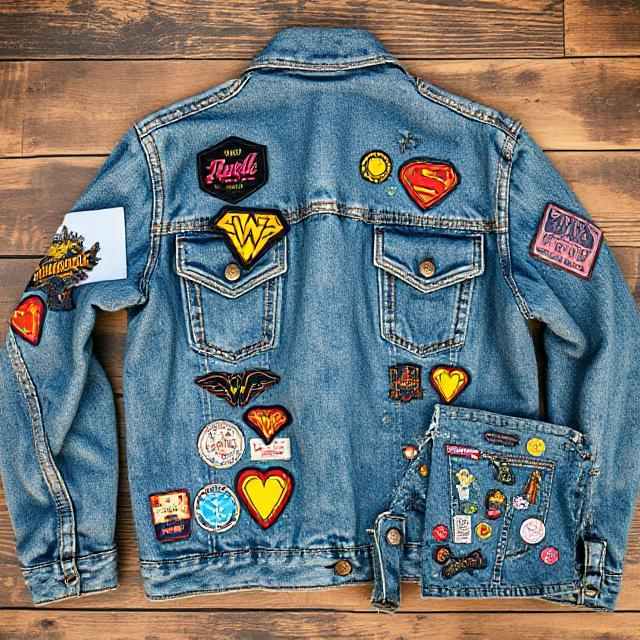
Something genuinely weird happened during and after COVID, letterman jackets came roaring back. Not the traditional high school kind (though those too, kind of), but customized bomber jackets, denim jackets, vintage athletic wear became these status symbols again, especially with Gen Z and younger millennials who weren’t even alive when this was a thing the first time.
And they all want patches. Lots of patches.
TikTok and Instagram are absolutely flooded with “jacket tours” where people show off their patch collections like they’re giving museum docent talks. These aren’t your grandfather’s varsity letters, they’re these curated collages of sports teams, favorite players, memorable games attended, personal achievements. The jacket becomes a wearable autobiography, a conversation piece, a flex.
This creates, and I’m not exaggerating, a multi-layered opportunity that’s almost ridiculous in its potential. First layer: designing and selling sports-specific patches for this customization trend (straightforward). Second layer: offering curation services where you help people design their “story” through patch placement and selection (yes, people absolutely pay for this, like $100-200 for a consultation).
There’s a shop in Brooklyn that pivoted completely to this model in 2024. They focus exclusively on vintage sports jacket restoration with historically accurate patches. Their average project runs $400-600 with, get this, a two-month waitlist. They’re doing maybe 15-20 jackets monthly, which means… $6,000-12,000 in revenue from a niche that barely existed three years ago? Four years ago this was nothing. Now it’s a viable business model.
The psychology here is identity construction, people don’t just want to be fans anymore, they want to be recognized as fans. As people with taste, history, authentic connections to sports culture. Patches are the currency. The language. The proof.
Trading Culture: The Collecting Market That Mirrors Cards (But at 1/10th the Entry Cost)
Okay so here’s something the mainstream sports investment world, the card graders, the memorabilia auction houses, the guys on YouTube analyzing rookie card markets, hasn’t caught onto yet: patch trading communities are exploding, and the economics are remarkably similar to card collecting but wayyyyyy more accessible.
Limited-edition team patches, stadium opening commemoratives, playoff and championship patches, they’re all appreciating in value at rates that should make you pay attention. A 2019 Toronto Raptors championship patch originally retailed for $15. Right now? Selling for $65-80 on secondary markets (eBay, specialty forums, Instagram dealers) to collectors who didn’t grab one in time. That’s over 400% appreciation in six years, which beats the S&P 500 for that period. Just saying.
But unlike sports cards where a decent rookie card costs thousands (or tens of thousands if you’re chasing the real stuff), patch collecting has this incredibly low barrier to entry. You can start a legit, meaningful collection for $200-300, and if you’re strategic about snagging limited releases when they drop, you’re building actual value that compounds over time.
The untapped opportunity here comes in three flavors, and I use ‘flavors’ deliberately because they each taste different, if that makes sense? First: become a dealer/broker in the secondary patch market, buying collections from people who don’t realize what they have, identifying valuable pieces, reselling to collectors who do. Second: create a patch authentication and grading service, which, this is crazy, doesn’t exist yet in any standardized way. There’s no PSA for patches. That’s a massive gap waiting for someone to fill it. Third: design limited-run patches specifically for the collector market with transparent numbering and certificates of authenticity. Artificial scarcity done ethically and openly.
A collector in Chicago (met him at a card show in 2023, actually) started documenting secondary market values of sports patches, creating this free database on a basic website. Within a year he’d built enough authority and following that he launched a subscription service at $29/month providing market analysis and acquisition tips. Last I heard he had 340+ subscribers. That’s over $9,000 monthly from just organizing information about a market most people don’t even know exists.
Wild.
Your Move: The Gold Rush Is Happening Whether You Join or Not
The beautiful, maybe even poetic, thing about these opportunities? They’re still early. The market’s not saturated yet. The big corporate players haven’t caught on because patches seem too small, too niche, too “unscalable” (which is exactly what makes them scalable for individuals and small operations). You can enter with minimal capital, test ideas quickly, and scale based on what works in your specific community or niche.
Start small, like genuinely small. Pick one opportunity from this list, just one, and test it this month. Not next quarter when you’ve done more research or when conditions are “perfect” or when you feel more ready, but now. Order sample patches. Talk to one youth coach at your local park. Design one memorial tribute for an athlete or figure who matters in your area. List one vintage jacket on Poshmark or Depop.
The barrier to entry is so absurdly low that your biggest risk isn’t failure (failure costs you like $50-100 and some time), your biggest risk is inaction while you watch other people figure this out.
The patch revolution in sports culture is happening in the margins, in those overlooked spaces, in communities that everyone else dismissed as “too small to matter” or “not worth the effort.” But those communities? They’re loyal. They’re passionate. They’re waiting, actively waiting, for someone who actually understands what they want and can deliver it without the corporate markup or the artificial scarcity or the gatekeeping.
That someone could be you. Should be you, maybe? The question isn’t really whether this opportunity exists (it does, clearly). The question is whether you’ll recognize it and act before the window closes and everyone else figures out what’s been sitting there all along.