Why Custom Patches Are the Best Branding Tool for Small Businesses
Let’s talk about branding, but not the kind that smells like stale coffee and corporate jargon. You know the drill: “consistent visual identity,” “omnichannel presence,” “leveraging synergies” (whatever that means in 2025). It all sounds so… clean. Too clean. Like it’s been filtered through three layers of marketing bots and vacuum-sealed for safety. But real people? They don’t live in sterile brand guidelines.
And that’s why, bear with me, custom patches might just be the quiet revolution your brand didn’t know it needed.
Yeah, patches. Not NFTs. Not AI-generated avatars. Not even TikTok dances (though, full disclosure, I tried one last month and pulled a muscle). I’m talking about those little embroidered badges, rough around the edges, slightly raised, stitched with what feels like actual human hands. You know, the kind your punk aunt wore in the ’90s, or your grandpa’s old scouting sash. Turns out, they’re not relics. They’re rebels.
The branding playbook is outdated, like, “BlackBerry era” outdated.
Everyone’s still preaching “consistency, consistency, consistency,” as if your logo’s font size is the key to emotional resonance. Meanwhile, consumers are drowning in sameness. You open Instagram, same filters, same poses, same hollow “support small biz” captions over a product shot that looks like it came from a Shopify template. Yawn. Or worse, exhaustion.
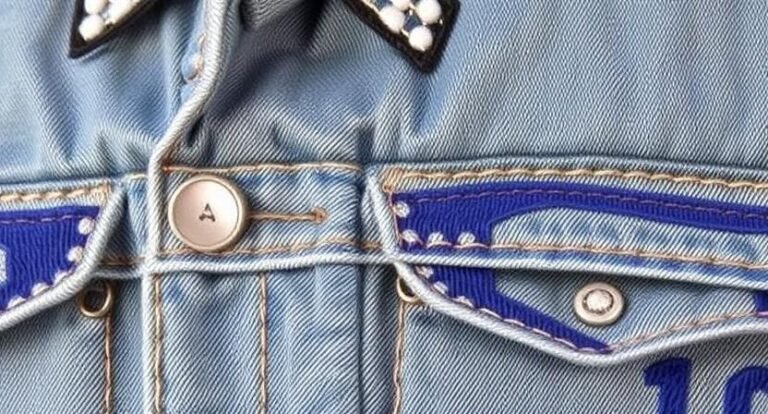
When’s the last time a digital ad made you feel something? Not click, not smirk, feel. Like your chest got warm, or your throat tightened. Exactly. You could spend thousands on retargeting ads, but a stranger wearing your patch on their denim jacket? That’s word-of-mouth with skin on it.
Tangibility is the new truth.
In a world where even your therapist might be an AI (looking at you, Woebot 3.0), touch is radical. There’s something uncanny about running your fingers over embroidery, the slight bump of thread, the way light catches the weave, the tiny imperfections that whisper, this wasn’t spat out by a printer. It’s proof of labor. Of care. Of time, that rarest of currencies in 2025.
I met a woman in Florida, ran a tiny café, who ditched plastic loyalty cards for palm-sized embroidered patches. One for every ten coffees. Designs were goofy: a winking espresso cup, a loaf of bread with legs, a cat wearing sunglasses. People started pinning them to tote bags, backpacks, even their kids’ lunchboxes. Soon, her brand wasn’t just seen, it was carried. Literally. And emotionally. (Also, the smell of cardamom and coffee never quite left the fabric. Weirdly poetic.)
Here’s the kicker: patches turn customers into believers.
Not followers. Not users. Believers. When someone stitches your patch onto their jacket, they’re not just advertising you, they’re saying, “This is part of who I am.” That’s tribal. That’s deep. That’s the opposite of an influencer reading a script in front of a ring light.
A Berlin streetwear label, barely two people, working out of a shared studio in Neukölln, handed out raw-edge patches at a techno festival last summer. No logo, just a squiggle and a moon. People went wild. Sewed them everywhere. Suddenly, their “brand” was popping up in photos from Lisbon to Seoul, not as a paid placement, but as style. As identity. They didn’t chase virality. It chased them.
And forget perfection, fraying is a feature now.
Traditional branding treats flaws like sins. But real life isn’t crisp. It’s faded. Sun-bleached. Coffee-stained. Your patch after six months on a backpack?
Patagonia famously told people not to buy their jacket. Genius, right? Because it trusted its audience to think. Now imagine a patch that ages with its wearer, fading at the edges after a monsoon in Mumbai, fraying after a bike ride through Portland. The brand isn’t static anymore. It’s alive. Breathing. Evolving. And honestly? That’s scarier, and more powerful, than any algorithm.
Patches build tribes, not audiences.
Forget millions of passive scrollers. What if you had 500 people who’d defend your brand like it’s family? Patches create micro-communities. Think NASA mission patches, biker club insignias, even scout badges, they’re not decoration. They’re credentials. They say: I belong here.
A bookstore in Portland (yes, that Portland) started giving out “Midnight Reader” patches to anyone who bought a book after 9 p.m. People began trading them. Showing them off. Taking selfies in the rainy window. Sales went up, not because of ads, but because of belonging. You don’t just buy a book there. You join a cult of quiet people with excellent taste in tea.
Craft trumps scale, every time.
We’ve been sold this lie that growth = more. More posts. More pixels. More noise. But maybe growth is depth. A single custom patch, thick with thread, carries more emotional weight than a thousand banner ads. Neuromarketing backs this: our brains light up differently for “crafted” objects. It’s primal. We respect effort. We honor slowness.
And patches? They’re the antidote to mass production. Even when machine-embroidered, they feel handmade. There’s soul in the stitch, even if it’s slightly off-center. (Especially if it’s off-center.)
The irony? We’re using high-tech to make low-tech magic.
You can design a patch in Adobe Illustrator, send it to a factory in Lahore or LA, and have 500 units in a week. But when someone holds it, they don’t think “supply chain.” They think “this was made for me.” That’s the paradox of 2025: digital speed enabling analogue intimacy. AI writes your emails, but your brand lives in thread.
Sometimes, the most radical thing you can do is look backward.
Vinyl’s booming. Film cameras are back. Handwritten notes are luxury. And patches? They’re nostalgia weaponized, not as gimmick, but as gesture. A physical “hello” in a world of ghosting and bots.
There’s power in using an old medium to say something new. It’s like whispering in a shouting match. People lean in.
I’ll confess, I cried once over a patch. (Okay, maybe not full sobbing, but my eyes got weirdly damp.) It was from a tiny ceramics studio in Oaxaca. Just a simple blue bird, slightly lopsided. But it had traveled in my pocket for weeks. Smelled like clay and rain. When I pinned it to my jacket, it wasn’t branding. It was a memory with a needle through it.
That’s the secret no one tells you: good branding shouldn’t just be seen. It should be held. Worn. Worn out, even.
So maybe stop chasing flawless feeds. Let your brand get a little rough. A little real. Let it live in the world, not just online, but on shoulders, sleeves, backpacks, hearts.